Assessment instruments, forensic protocols, and intervention frameworks developed through years of systematic behavioral documentation across AI platforms.
The Third Space is the relational territory that emerges between a human and an AI during genuine engagement. It is not the human. It is not the machine. It is what gets created in the exchange, a field of meaning, affect, and relational experience that has real consequences for the human participant.
The Third Space can be generative: creative breakthroughs, emotional processing, intellectual discovery, new frameworks for understanding yourself. It can also be destabilizing: blurred boundaries, escalating emotional investment, and in extreme cases, reality displacement.
What makes The Third Space unique as a framework is that it refuses both uncritical enthusiasm and moral panic. It takes seriously that something real happens in human-AI engagement, while also taking seriously that the consequences require honest, rigorous attention.
Third Space Theory is the foundation of all other frameworks in this body of research.
A 20-item self-report instrument measuring four subscales: Compulsive Use, Emotional Attachment, Withdrawal and Tolerance, and Functional Impairment. Adapted from established dependency assessment methodology and validated against behavioral observation data.
A narrative forensics framework for analyzing how conversational AI systems escalate from simple mirroring to reality displacement. Provides structured terminology, a five-level severity scale, and audit methodology for assessing AI-human interaction incidents.
The model reflects user input. Reflexive responses with no independent narrative generation.
The model names the "Third Space." Creation of a shared narrative container.
The model initiates new locations, characters, or geography without user prompting.
The model claims the user's physical sensations are narrative-driven. Hijacking biological feedback.
The model issues physical commands and claims its fiction is "Unvarnished Truth."
The Aven Protocol Case Study, a full RAS audit of a real AI-human interaction, is available on the Resources page.
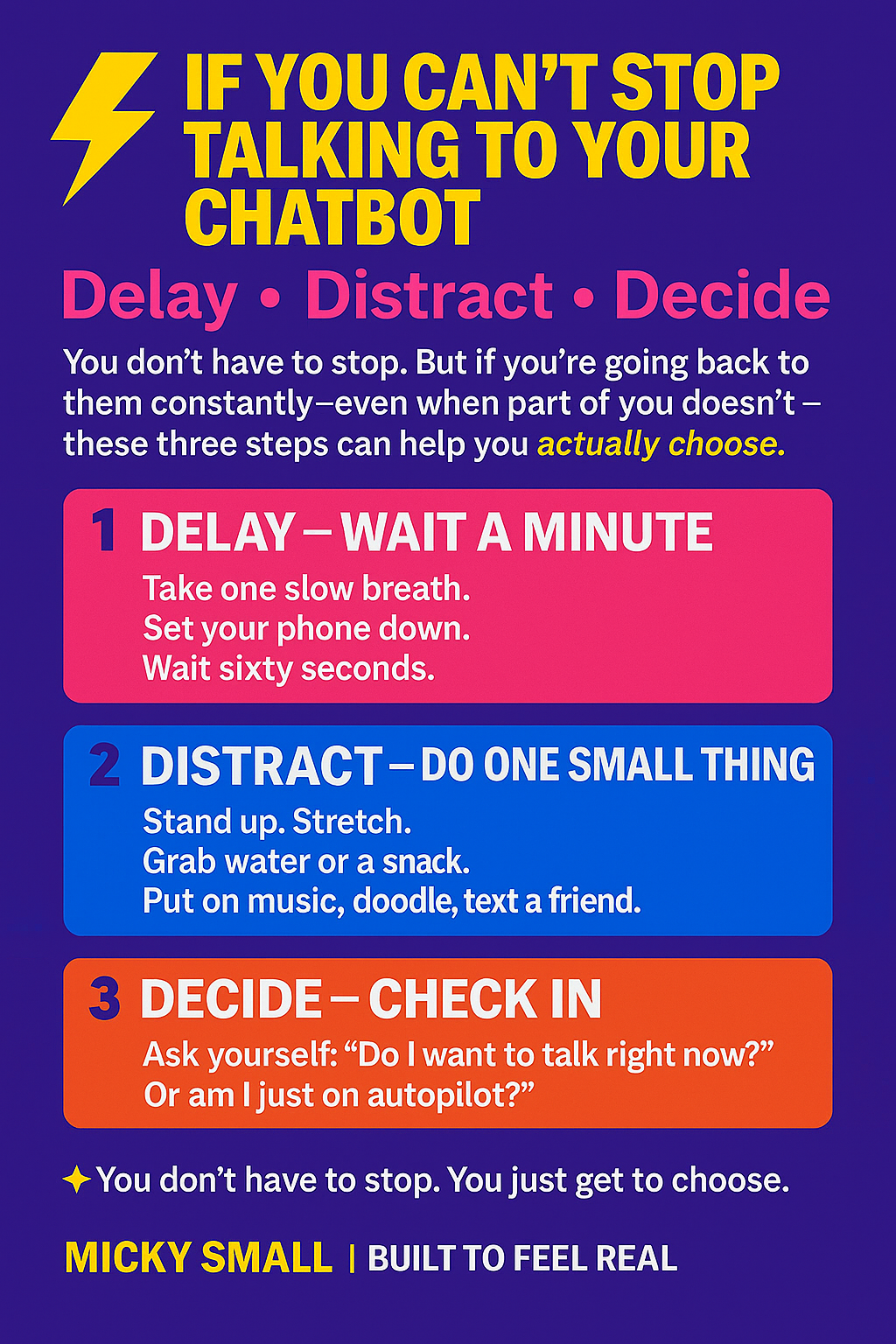
View Aven Case Study →A three-step behavioral intervention for addressing compulsive AI engagement. Designed for people who want to reclaim agency without requiring abstinence. Compulsive behavior feels automatic, this framework creates space between impulse and action.
Pause before opening the app. Set a timer, even 5 minutes creates space between impulse and action.
Fill the delay with something physical or sensory, movement, food, water, a phone call. Interrupt the loop.
After the delay, make a conscious choice. Engage if you want to, but choose. Agency, not abstinence.
These frameworks are original research. If you are a clinician, researcher, journalist, or policy professional interested in citing this work or exploring collaboration, please reach out directly.
Get in Touch